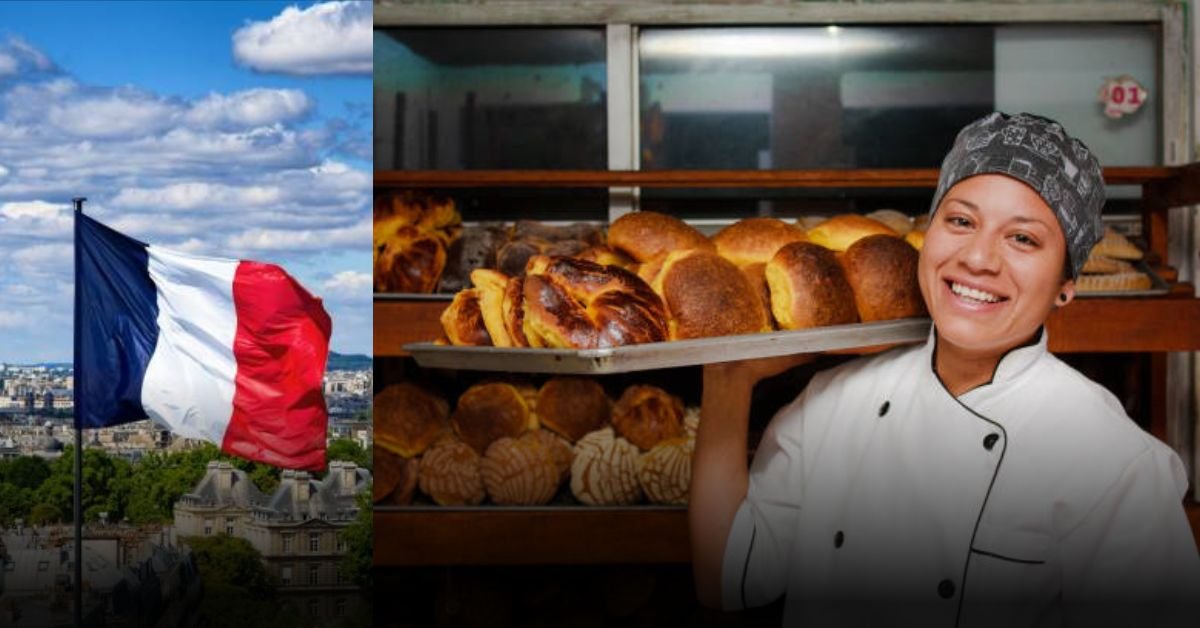
Many people dream of working in a French bakery or café. The smell of fresh croissants, the busy morning rush, and the happy customers – it looks like a perfect life. Right now, France has a big problem: there are not enough workers in cafés, restaurants, and bakeries. Because of this shortage, the French government made it easier for people from other countries (outside the EU) to come and work in these jobs. If you are a baker, pastry chef, cook, or server, this is your chance!
This simple guide will show you step by step how to get a job and a work visa in France in 2025–2026.
The Opportunity: French Hospitality’s Talent Gap
France loves food and cafés. Every year more tourists come, and more French people eat out. Big studies say the food and restaurant market in France will keep growing until 2030 and after. But many French people do not want these jobs anymore because the hours are long and the work is hard. So restaurants, hotels, and bakeries cannot find enough staff.
The government knows this problem. That is why they put many café and restaurant jobs on the official “shortage jobs list” (called Métiers en tension). When a job is on this list, it is much faster and easier for a foreign worker to get a visa.
High-Demand Roles in Bakery & Café
These are the jobs that need people the most in 2025:
- Boulanger (Baker) – the person who makes bread and viennoiserie (croissants, pain au chocolat, etc.)
- Chef Pâtissier (Pastry Chef) – makes cakes, tarts, macarons, and desserts
- Cuisinier (Cook) – prepares hot food in cafés and brasseries
- Commis de Cuisine (Kitchen Assistant) – helps the cooks
- Serveur / Serveuse (Waiter / Waitress) – takes orders and serves customers
- Barista – makes coffee (very popular in big cities)
These jobs are needed everywhere: Paris, Lyon, Marseille, Nice, Bordeaux, Strasbourg, Provence, Côte d’Azur – every tourist area has empty positions.
Good news: In May 2025 the government made the shortage list bigger and added more restaurant and café jobs. So now it is officially easy to hire foreign workers for these roles.
The Immigration Process: Your French Work Visa
If you are not from an EU country, you need a work permit and a visa. The official name is Procédure d’Introduction d’un Travailleur Étranger. It has two main steps.
The Employer Secures the Work Authorization
First, you need a real job offer from a French boss.
- You and the employer sign a work contract. It can be CDI (permanent contract) or CDD (fixed-term contract, minimum 12 months is best).
- The contract must follow the rules of the HCR collective agreement (the special rules for hotels, cafés, and restaurants).
- The employer sends the contract and your documents to the government office called DIRECCTE (or DRIEETS in some regions).
Big advantage: Because bakery and café jobs are on the shortage list, the employer does NOT have to advertise the job in France and Europe for months (this is called the “labor market test”). Without this test, the work permit is approved very fast – often in 2–4 weeks.
The Worker Applies for the Long-Stay Visa
When the work permit (Autorisation de Travail) is approved, you receive an official paper.
You take this paper to the French consulate or embassy in your home country and apply for the long-stay work visa called:
Visa de Long Séjour valant Titre de Séjour – Travail (VLS-TS Travail).
What you need to bring:
- Passport (valid minimum 18 months)
- The approved work permit
- Signed work contract
- Birth certificate (sometimes needs translation and legalization)
- Police clearance certificate (proof you have no serious crimes)
- Passport photos
- Proof you have a place to live in France (the employer often helps)
- Visa fee (around €99 + service fee)
The visa is usually given for 1 year and works as your residence permit when you arrive.
Post-Arrival: Validation and Residency
When you arrive in France:
- Within the first 3 months, you must go online and validate your VLS-TS with OFII (immigration office). You pay a small tax (around €200–250) and get a sticker in your passport.
- Before the visa ends (after 11–12 months), you go to the Préfecture with your employer and ask for a multi-year residence card called Carte de Séjour Salarié (usually 2–4 years). After 5 years of work you can ask for a 10-year card or even French nationality.
French Labour Rights and Compensation
In France, foreign workers have exactly the same rights as French workers. The law protects you very well.
Wages and the Collective Agreement
You cannot be paid less than the legal minimum.
- National minimum wage (SMIC) in 2025 is about €11.88 gross per hour.
- For a normal 35-hour week, that is around €1,800 gross per month.
- In cafés and restaurants, most people work 39 hours per week, so the real minimum in the HCR sector is higher – usually €12–€12.50 per hour for beginners.
- Extra hours (above 35) are paid 25%–50% more, or you get extra days off.
- Skilled bakers and pastry chefs easily earn €2,200–€3,500 gross per month or more, especially in Paris or famous bakeries.
Every year the wages go up automatically.
Financial and Social Benefits
When you work legally, money is taken from your salary every month for social protection. This gives you:
- Free health care (Carte Vitale) – doctor, hospital, medicine almost free
- Unemployment money if you lose your job later
- Retirement pension
- Paid holidays – minimum 5 weeks per year!
- Sick leave pay
- Maternity/paternity leave
- Help to find an apartment (sometimes the employer gives cheap housing)
Taxes are taken directly from your salary every month, so you do not have a big tax bill at the end of the year.
Final Tips to Get the Job
- Make a good CV in French (use simple, clear words).
- Learn at least basic French – it helps a lot (A2–B1 level is enough to start).
- Look for jobs on websites like:
- Pôle Emploi (official French job site)
- Indeed.fr
- Hôtellerie-Restauration.fr
- Facebook groups “Boulangerie Pâtisserie Recrutement”
- Many famous bakeries (Maison Kayser, Eric Kayser, Poilâne, Dominique Saibron, etc.) and big café chains hire foreign workers every year.
- Be ready to show your diplomas and experience (photos of your cakes, bread, certificates).
Call to Action (CTA)
Do you want to wake up every morning and make fresh baguettes or beautiful pastries in France? Your dream can become real in 2025–2026 because France really needs you!
Comment below and tell us:
- What is your job? (Baker, Pastry Chef, Cook, Barista…)
- Where do you want to work? (Paris, Lyon, Nice, Provence…)
We will try to help you with contacts and new information about the shortage list and visa rules.
Good luck – à bientôt in France!
Disclaimer:
This information is for education only. Always check the latest rules with the French consulate, your employer, or an immigration lawyer in France.